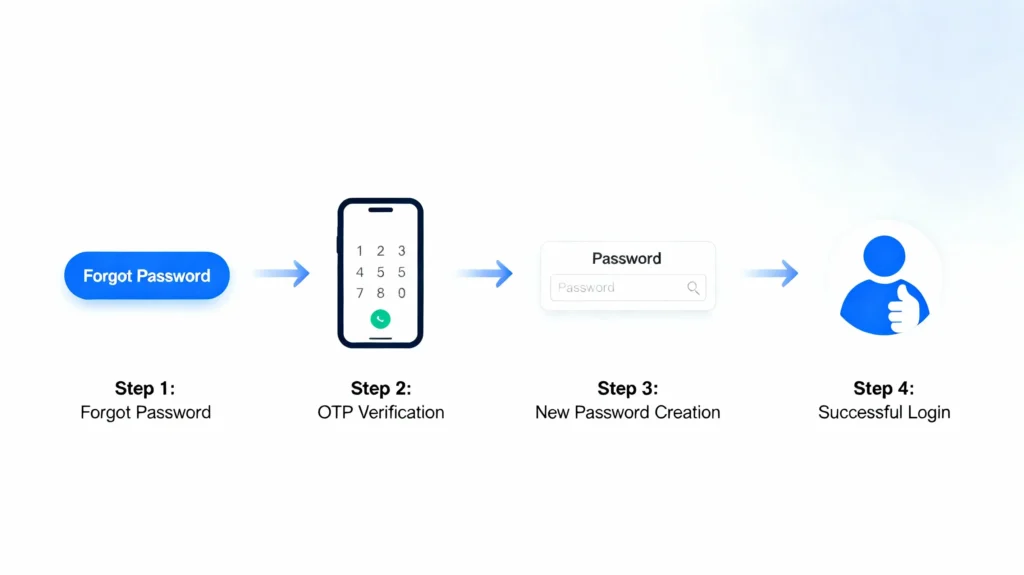
Lotus365 Login Security: Protect Your Account in 2025
Your Lotus365 secure login protects more than just gaming access. It guards your personal information, payment methods, and betting funds. Hackers target gaming accounts because they contain real money and valuable data.
Lotus365 login security requires more than a simple password. This comprehensive guide covers every protection method you need. From enabling two-factor authentication to identifying phishing scams, you will learn how to keep your account safe from unauthorised access.
Implementing these security practices takes just 15 minutes. However, the protection they provide is invaluable. By the end of this guide, you will have hardened your Lotus365 secure login against the most common cyber threats.
Table of Contents
Why Lotus365 Account Security Matters
Gaming accounts face constant threats. In 2025, the gaming industry reported a 94% increase in cyber attacks. Most attacks target login credentials and personal data.
A compromised Lotus365 secure login exposes you to multiple risks. Hackers can steal your deposited funds, place unauthorised bets, change your account settings, and access linked payment methods. Recovering a hacked account takes time and often results in financial loss.
Your account security is your responsibility. While Lotus365 provides encryption and security infrastructure, you must take active steps to prevent unauthorised access. Think of Lotus365 secure login like a house. Lotus365 builds the locks and walls, but you must use them properly and guard your keys.
Part 1: Creating an Unbreakable Lotus365 Login Password
How to Create a Strong Password for Lotus365
Your password is the first line of defence for your Lotus365 secure login. A weak password makes hacking simple. A strong password makes it nearly impossible.
Password strength requirements:
A strong password contains at least 12 characters. Longer is better, especially for accounts holding real money. Use a combination of uppercase letters, lowercase letters, numbers, and special symbols like @, #, $, or !.
Example of a strong password: Cricket@2025#Secure42
Example of a weak password: Lotus123 or cricket2025
The weak password is easy to remember but easy to crack. Hackers use dictionary attacks and birthday guessing. The strong password combines random elements that cannot be guessed.
Avoid these password mistakes:
Never use your username, name, or birthdate in your password. Hackers search social media for this information. Never use sequential numbers like 1234 or 5678. Never use simple keyboard patterns like qwerty. Never reuse passwords from other websites.
If your password appears in a data breach on another platform, that same password becomes vulnerable on all your accounts. This is called credential stuffing, where hackers use leaked passwords to access multiple sites.
Use a password manager:
Remembering unique, complex passwords for every account is impossible. Password managers like 1Password, NordPass, or LastPass generate and store strong passwords securely.
These tools encrypt your passwords, require a master password to access them, and can autofill passwords on websites. They also alert you if your passwords appear in known data breaches.
Change Your Password Regularly
Even strong passwords require periodic updates. Industry experts recommend changing passwords every 3-6 months.
More frequent changes are needed if you suspect any unauthorized access. Also change your password if you used it on another website that experienced a data breach.
How to change your Lotus365 password:
Log into your account and go to Account Settings or Security Settings. Look for “Change Password” or “Update Password”. Enter your current password first (this verifies you own the account). Type your new strong password twice to confirm. Save the changes immediately.
After changing your password, write it down securely or save it in your password manager. Do not email it to yourself or store it in unencrypted text files.
Part 2: Enable Two-Factor Authentication (2FA)
What Is Two-Factor Authentication (2FA)?
Two-factor authentication (2FA) requires two separate verification steps to log into your account. The first factor is your password. The second factor is something only you possess, like your phone.
Even if hackers steal your password, they cannot access your account without the second verification. This is why 2FA is considered essential for any account holding sensitive data or money.
Lotus365 secure login with 2FA enabled becomes dramatically harder to compromise.
How to Enable 2FA on Lotus365
Step 1: Access Your Security Settings
Log into your Lotus365 account. Navigate to Account Settings or Security Settings. Look for “Two-Factor Authentication,” “2FA,” or “Multi-Factor Authentication” options.
Step 2: Choose Your 2FA Method
Lotus365 typically offers multiple 2FA options. The most common methods are SMS-based OTP and authenticator apps.
SMS-based OTP: A one-time password is sent to your phone via text message. You enter this code during login. This method is simple and requires no additional app installation.
Authenticator App Method: Download an authenticator app like Google Authenticator, Microsoft Authenticator, or Authy on your smartphone. The app generates time-based one-time passwords (TOTP) that expire every 30 seconds.
Step 3: Set Up Your Chosen Method
For SMS-based OTP:
Verify your phone number is correct. Click “Send OTP” or similar. You receive a text message with a verification code. Enter this code in the field to confirm SMS 2FA is active.
For Authenticator App:
Download your chosen authenticator app from Google Play or Apple App Store. On Lotus365, select “Use Authenticator App”. You see a QR code. Open your authenticator app and select “Scan QR Code”. Point your phone camera at the QR code to scan it.
The app now displays a 6-digit code that changes every 30 seconds. Enter this code in Lotus365 to confirm the app is linked properly.
Step 4: Save Backup Codes
After enabling 2FA, Lotus365 provides backup recovery codes. These are crucial. Save these codes in a secure location, not on your device or in cloud storage.
If you lose access to your authenticator app or phone, these backup codes allow you to regain account access. Without them, you may be permanently locked out.

Part 3: Prevent Phishing Attacks
How Phishing Attacks Target Lotus365 Users
Phishing is a social engineering attack where criminals trick you into revealing your login credentials. They create fake emails, messages, or websites that look identical to the real Lotus365.
How phishing works:
You receive an urgent email: “Suspicious activity detected on your account. Log in to verify.” The email looks official, complete with Lotus365 logos and formatting. You click the link and see a fake login page that looks exactly like the real one. You enter your username and password thinking you are logging into Lotus365. The fake page captures your credentials and closes. Hackers now have your login information.
This is why phishing is dangerous. It relies on trust. Even experienced users sometimes fall for convincing phishing attempts.
How to Identify Phishing Attempts
Red Flag 1: Suspicious Sender Address
Real emails from Lotus365 come from official company email addresses. They never come from Gmail, Yahoo, or unknown addresses. Check the “From” field carefully. Phishing emails often use addresses that look similar but are subtly different, like support@lotus365.comupdate.net instead of support@lotus365.com.
Red Flag 2: Urgent Language and Threats
Phishing emails create artificial urgency. Examples include: “Your account will be closed in 24 hours.” “Verify your identity immediately.” “Unusual activity detected.” “Your payment method is invalid.” Real support emails rarely use this pressure tactic. Legitimate security alerts ask you to log into your account directly through the official website, not through email links.
Red Flag 3: Requesting Sensitive Information
Lotus365 will never ask for your password, OTP code, or payment information via email, SMS, or chat. If you receive such a request, it is definitely a phishing attempt. Real companies never ask you to verify sensitive information through email.
Red Flag 4: Strange Links and URLs
Before clicking any link, hover your mouse over it (do not click) to see the actual destination URL. Phishing emails often hide malicious links behind text that appears legitimate. For example, the text might say “Click here to verify” but the actual link goes to malicious-site.com.
Always check the URL in your browser’s address bar. The domain should be the official Lotus365 website, not a lookalike domain.
Red Flag 5: Requests to Download Files
Phishing emails sometimes ask you to download an attachment like a PDF or Word file. These files often contain malware that infects your device. Never download attachments from unsolicited emails, even if they look legitimate.
How to Respond to Phishing Attempts
If you receive a suspicious email:
Do not click any links or download attachments. Do not reply to the email. Report it as spam or phishing to your email provider. If the email claims to be from Lotus365, forward it to official Lotus365 support to report the phishing attempt.
If you accidentally entered your credentials on a fake login page:
Change your password immediately on the official Lotus365 website. Enable 2FA if you have not already. Check your account activity for unauthorized access. Contact Lotus365 support to report the incident.
If you suspect your account has been compromised:
Change your password immediately. Review your account activity and transaction history. Check for unauthorized email or phone number changes. Report the incident to Lotus365 support. Disable any connected payment methods and review them for unauthorized charges.

Part 4: Secure Lotus365 Login on Public WiFi
Risks of Public WiFi for Gaming Accounts
Public WiFi networks in cafés, malls, hotels, and airports are convenient but dangerous for Lotus365 secure login. These networks are often unencrypted, allowing hackers to intercept your data.
When you log into your account on public WiFi, hackers on the same network can capture your login credentials using simple tools. This is called a man-in-the-middle attack.
Never log into your Lotus365 account on:
Public WiFi networks you do not recognize. Shared office networks where IT staff can monitor traffic. Airport WiFi without a password. WiFi networks with no security lock.
How to Securely Log In on Public Networks
If you must log into your account on public WiFi, use a VPN (Virtual Private Network). A VPN encrypts all your internet traffic, making it invisible to other users on the network.
Reputable VPN services include ExpressVPN, NordVPN, and Surfshark. These services create a secure tunnel for your data, even on public WiFi.
Steps to use a VPN:
Download and install a VPN app from your device’s app store. Open the VPN and connect to a server location. Once connected, open your browser and log into Lotus365. Your connection is now encrypted. Use the VPN for the entire duration of your session.
However, the safest practice is simple: Never log into Lotus365 on public WiFi, even with a VPN. Wait until you are home on a private network.
Part 5: Device Security Measures
Keep Your Device Updated
Running outdated software on your computer or phone creates security vulnerabilities. Hackers exploit known weaknesses in old software versions.
Update your device regularly:
- On Windows: Go to Settings > Update & Security > Windows Update and install all available updates. Restart your device after updates.
- On Mac: Click the Apple menu and go to System Preferences > Software Update. Install any available macOS updates.
- On Android: Go to Settings > About phone > System update and check for updates. Install any available patches.
- On iOS: Go to Settings > General > Software Update and install the latest iOS version.
These updates include security patches that fix hacking vulnerabilities. Delaying updates leaves your device exposed.
Install Antimalware Software
Malware is malicious software designed to steal your information or damage your device. A good antimalware solution detects and removes threats.
Recommended antimalware options include Malwarebytes, Norton, and McAfee. These tools scan your device for malicious software and remove threats.
Install antimalware software and run regular scans, at least weekly. Enable real-time protection so threats are detected automatically as they appear.
Disable Unused Apps and Permissions
Unnecessary apps and excessive permissions increase your device’s attack surface. Review installed apps and remove anything you do not use.
For each remaining app, review what permissions it requests:
Be suspicious of:
Gaming apps asking for access to your contacts or emails. Apps requesting permission to make phone calls. Apps wanting access to your financial information. Any app with permissions that seem unrelated to its function.
On Android: Go to Settings > Apps and review permissions for each app. Disable unnecessary permissions.
On iOS: Go to Settings > Privacy to review app permissions.
Part 6: Monitoring and Verification
Check Your Account Activity Regularly
Even with all security measures, unauthorized access sometimes occurs. Regular monitoring helps you detect and stop unauthorized access quickly.
How to check account activity:
Log into Lotus365 and look for “Account Activity,” “Login History,” or “Security” sections. Review all recent logins. Check the dates, times, and devices used. Look for any sessions you do not recognize.
Warning signs of unauthorized access:
Login from unfamiliar locations or IP addresses. Logins at times when you were not using the account. Devices you do not own. Changes to your profile information, email, or phone number you did not make. Unusual betting activity or withdrawals. Changes to your security settings or password.
If you find suspicious activity:
Change your password immediately. Review all linked payment methods and report unauthorized charges to your bank. Contact Lotus365 support with details of the unauthorized access. Disable 2FA and re-enable it with a new authenticator app to remove the hacker’s access method.
Verify the Official Lotus365 Login URL
Before entering your credentials, verify you are on the official website. Fake websites look identical to real ones, but the URL is different.
How to verify the URL:
Look at the browser’s address bar at the very top of your screen. The domain should be the official Lotus365 website. Common fake domains include slight variations like lotus365.vip, lotus365.live, or lotusss365.com.
Always bookmark the official website. Use the bookmark to log in rather than searching for the site or clicking email links.
Check for HTTPS and a padlock icon in the address bar. HTTPS means your connection is encrypted. The padlock confirms the website’s identity is verified.
Part 7: What NOT to Do When Logging In
Never Share Your Login Credentials
Sharing your login information with anyone, including friends or agents, is the fastest way to lose account security.
Legitimate support staff will never ask for your password. If someone claims to be from Lotus365 support and asks for your password, it is a scam.
Exceptions: Password managers and authenticator apps need access to your credentials, but these are secure applications specifically designed to protect them.
Do Not Save Passwords in Your Browser
Your browser’s password save feature is convenient but insecure. If someone gains access to your device, they can retrieve all saved passwords easily.
Disable browser password saving:
- In Chrome: Go to Settings > Passwords and accounts and turn off “Offer to save passwords.”
- In Firefox: Go to Preferences > Privacy & Security and uncheck “Ask to save logins and passwords.”
- In Safari: Go to Preferences > Passwords and uncheck “AutoFill user names and passwords.”
Instead, use a dedicated password manager that requires a master password to access stored credentials.
Avoid Logging In on Shared Devices
Shared devices like public computers, office machines, or family computers pose serious risks. Even if you log out, malware or logged keystrokes might capture your credentials.
If you must use a shared device, always:
Log out completely and close all browser tabs. Clear your browser history and cookies. Verify the login URL before entering credentials. Use a password manager to autofill credentials rather than typing them manually.
Better practice: Access your account only from personal devices you control.
Part 8: Recognizing Common Scams
Too-Good-to-Be-True Offers
Scammers frequently offer free bonuses, instant winnings, or unrealistic rewards to lure players into fake login pages or malware downloads.
Examples include: “Claim your free ₹10,000 bonus,” “Instant betting system that always wins,” “Download our free prediction app.”
Real Lotus365 bonuses are credited automatically to your account. You do not need to click suspicious links or download files to claim them. If an offer seems too good to be true, it is.
Unsolicited Contact from “Support”
Scammers impersonate Lotus365 support on WhatsApp, email, or social media. They offer to help with account issues, then ask for your credentials.
Real Lotus365 support will never:
Initiate contact asking for your password. Ask you to download files or click suspicious links. Guarantee wins or offer special betting systems. Request payment for support (Lotus365 support is free).
If you receive unsolicited support messages, contact official Lotus365 support directly through the website to verify if it is legitimate.
Security Checklist for Lotus365 Secure Login
Complete this checklist to harden your account security:
Password Security:
- Created a password with 12+ characters combining uppercase, lowercase, numbers, and symbols
- Changed password within the last 3 months
- Stored password in a password manager, not on a document or email
- Verified your password is not used on any other website
Two-Factor Authentication:
- Enabled 2FA on your Lotus365 account
- Chose either SMS or authenticator app method
- Saved backup recovery codes in a secure location
- Tested 2FA by logging out and logging back in
Phishing Prevention:
- Know the official Lotus365 login URL and bookmark it
- Understand red flags of phishing emails (urgency, requests for passwords, suspicious links)
- Never click links from unsolicited emails
- Verify sender email addresses before responding
Device Security:
- Updated your operating system to the latest version
- Updated your browser to the latest version
- Installed and updated antimalware software
- Disabled browser password saving
- Reviewed installed apps and removed unused ones
Account Monitoring:
- Checked your account activity within the last week
- Reviewed all recent logins for unauthorized access
- Verified linked payment methods are correct
- Know how to contact Lotus365 support if needed
Frequently Asked Questions About Lotus365 Secure Login
Is my Lotus365 account really at risk?
Yes. In 2025, gaming accounts face 94% more cyber attacks than previous years. Even experienced players fall for phishing scams and malware.
How often should I change my password?
Is 2FA inconvenient?
Slightly, but the security benefit far outweighs the minor inconvenience. Each login takes an extra 10 seconds. Preventing account hacks saves hours of recovery time and potential financial loss.
What if I lose access to my authenticator app?
This is why backup recovery codes are essential. Store these codes in a secure location outside your device. If you lose your app, use a recovery code to regain access. Then re-enable 2FA with a new authenticator app.
Can I trust a VPN for public WiFi?
Yes, reputable VPNs like ExpressVPN and NordVPN are secure. However, the safest approach is avoiding public WiFi for sensitive accounts entirely.
Does Lotus365 store my password securely?
Yes. Lotus365 uses encryption and never stores passwords in plain text. However, your personal security measures are still crucial for protecting your account.
Summary
Lotus365 secure login is not automatic. It requires active, ongoing effort. The good news is that implementing robust security takes just 15 minutes initially, then minor maintenance.
Create a strong, unique password with 12+ characters. Enable two-factor authentication using either SMS or an authenticator app. Learn to identify phishing attempts and verify official URLs. Keep your devices updated and monitor your account activity regularly.
By following this guide, your Lotus365 login security becomes nearly impossible to compromise. Hackers will move to easier targets. Your account, personal information, and real-money funds remain protected.
Remember: The best security is multiple overlapping layers. A strong password alone is not enough. 2FA alone is not enough. Device security alone is not enough. Combined, these measures create a fortress around your account.
Implement these security practices today. Your future self will thank you when you remain safe while others fall victim to hacks and scams.
Link to Lotus365 Login Guide 2025: Easy Step-by-Step Access for Beginners – Direct new users to basic login steps after they secure their accounts.
Link to Lotus365 Login Issues: Troubleshooting & Solutions – Help users recover accounts if they experience access issues related to security measures.
Link to Lotus365 Sign Up Process: Step-by-Step Guide for Beginners – Guide users to implement security measures from account creation.
Link to Lotus365 Bonus Offers Explained: Get Maximum Rewards! – After securing their accounts, guide users to legitimate bonus opportunities.